


Uncategorised
Top Features to Look for in a Heavy-Duty Workbench

Apr
A loose, wobbling table in the middle of a repair job is enough to ruin your day. Many workshops upgrade tools first and ignore the base they work on. A solid, heavy-duty workbench quietly fixes half the problems before they even show up.
This blog is a breath of fresh air and demonstrates what should be considered when selecting a workbench that is capable of doing actual work rather than something light.
Why the Right Workbench Matters
Every task depends on stability. A poor setup slows things down, causes mistakes, and sometimes leads to damage.
Industrial workspace studies suggest that better workstation design can improve productivity by up to 20 per cent. That often starts with a reliable bench.
Material Strength Comes First
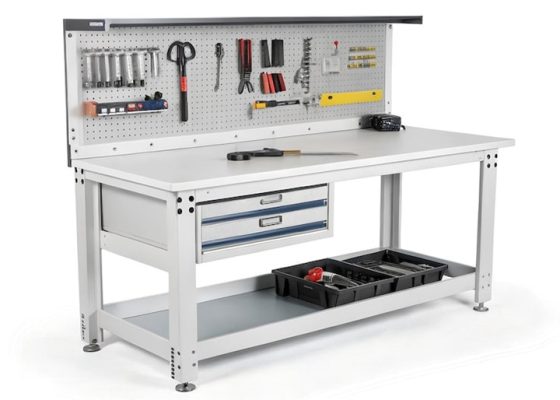
Material decides how long your bench will survive daily use. A steel workbench is often the safest choice for demanding environments. It is under pressure and does not wear easily over time. Many professionals favour the combination of a hardwood top and a steel frame as it is both strong and usable.
Low-quality materials or thin metal frames may initially appear okay. With time, they bend, rust or loosen at the joints.
Load Capacity Is Not Optional

Weight limits are not just numbers. They protect both your tools and your safety. A proper professional workbench should handle more than your current workload. Leaving extra capacity prevents long-term damage.
- Light-use setups usually need 200 to 300 kg
- Industrial or automotive tasks often require 500 kg or more
- Higher capacity means less strain on the structure over time
Ignoring this often leads to slow bending or sudden failure.
Stability Makes Daily Work Easier
Even small vibrations can affect precision work. A steady bench enhances accuracy, and frustration is minimised. Strong legs, reinforced frames and proper balance promote this. Adjustable feet are used in cases where the floor is not even, and this is common in older workshops. No one notices stability when it works. Everyone notices when it does not.
Work Surface Should Match the Job
Different tasks demand different surfaces. Hardwood tops work well for general repairs. Metal tops handle heat and heavy impact better. Electronics work may require anti-static surfaces.
Scratches and marks are normal. Durability is what counts. A good surface should handle years of wear without becoming unusable.
Storage That Actually Helps
Time gets wasted when tools are scattered. Scalable storage has everything at hand. It also minimises clutter, and this makes the workspace less risky and quicker to navigate.
- Drawers help organise smaller tools
- Shelves store bulky equipment
- Pegboards allow quick access to frequently used items
Simple storage upgrades can improve workflow more than expected.
Ergonomics is often ignored
Comfort affects performance more than most people admit. Incorrect bench height leads to back and shoulder strain. Over time, that reduces efficiency. Adjustable height options are becoming more common because they solve this problem directly.
A comfortable setup keeps energy levels steady throughout the day.
Customisation Adds Long-Term Value
Every workspace is different. A one-size setup rarely works well. Some workshops need fixed heavy setups. Others need mobility. Lockable wheels, modular storage, and adjustable features help adapt the bench to changing needs.
Real-world setups show that flexible designs last longer because they grow with the work.
Conclusion
The decision about selecting the appropriate bench does not depend on the features, but rather it is dependent. It should always be made of robust materials, have an appropriate load-carrying capacity, and be soundly stable.
The sturdy workbench, made of steel or a professional workbench, will hold all the activities without interference. Work is made easier, quicker and healthier. The Workshop Workbench is about creating solutions that can withstand practical work environments, not only on paper.
FAQs
1. What is the ideal weight capacity for a heavy-duty workbench?
A heavy-duty workbench should support at least 500 kg for industrial tasks, while lighter setups may need around 200 to 300 kg.
2. Why choose a steel workbench over other materials?
A steel workbench offers better strength, durability, and resistance to wear, making it suitable for demanding environments.
3. What defines a professional workbench?
A professional workbench is built with high-quality materials, offers higher load capacity, and includes features like stability and storage.
4. Can a heavy-duty workbench be used in small workshops?
Yes, many small workshops use heavy-duty workbenches for durability and flexibility across different tasks.