


Uncategorised
Electronics Workbenches for Soldering and PCB Repair
Dec
When I saw a technician restore a dead circuit board for the first time, it seemed like magic. It only required a silent bench, a steady hand and a few sharp tools to bring back order into the mess. The same tale is repeated daily in workshops in engineering laboratories, the repair centres, and DIY areas. And in the very centre of it all is a stable electronics workbench, which makes everything steady, efficient, and secure.
In this blog, we’ll explore how the right bench transforms PCB restoration, boosts accuracy, and supports smoother soldering work from start to finish.
Why the Right Electronics Workbench Matters
A strong electronics workbench does more than hold your tools. It shapes the entire repair process. When you’re working on PCB restoration, you need a clean, static-safe, and clutter-free surface. Even one small spark or misalignment can damage sensitive components.
The vast majority of technicians say that a steady ESD-compatible working surface brings fewer errors and makes them identify errors more quickly. This is the reason why the selection of the bench is not only a comfort choice, but it is also a performance improvement.
Essential Features to Look For
Before you buy, check whether the electronic workbench includes these essentials for PCB restoration and soldering:
ESD-Protected Work Surface
Sensitive boards react instantly to static. An ESD laminate top and grounding points help protect the board while you work. This is the #1 feature technicians mention when discussing PCB repair success.
Good Lighting Support
Bright, shadow-free lighting helps you avoid mis-soldering tiny pads or missing microcracks during PCB restoration. Even a small light rail upgrade can change everything.
Shelving, Pegboards & Tool Storage
A crowded bench leads to mistakes. Storage above or below the electronics workbench keeps tools close but out of your soldering area.
Adjustable Height
PCB work often needs long hours of sitting or standing. Adjustable height workbench reduce fatigue and improve precision.
Real-World Mini Case Study
Sam, a mobile repair tech, upgraded from a simple table to a dedicated electronics workbench with ESD protection. His PCB restoration success rate jumped noticeably. The difference wasn’t new tools; it was the bench. With better grounding, lighting options, and sturdy support, he spotted issues faster and avoided heat damage on dense solder pads.
This mirrors what many professionals discover: the bench is the real foundation of quality repair.
How to Set Up a Bench for Faster PCB Repair
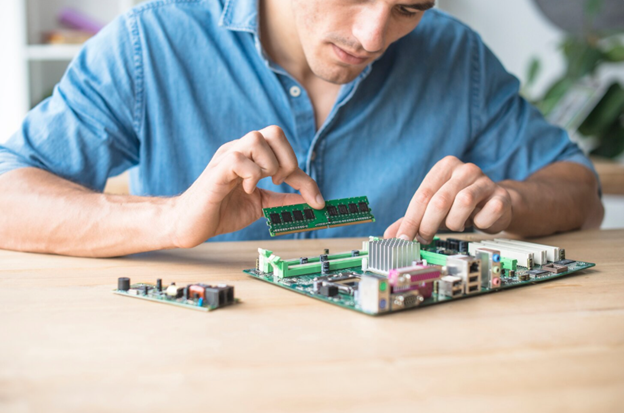
It is a simple list of things that you are going to put together on your electronics workbench so your PCBs can be restored easily in case you are establishing your workstation for the first time:
- Place your fume extractor on the left or right side, never behind.
- Keep tweezers, solder wire, flux, and tips in one reachable zone.
- Use magnetic trays to avoid losing screws.
- Add a grounded mat for extra static protection.
- Keep cleaning alcohol, cotton swabs, and brushes in a single labelled tray.
These small habits prevent chaos and boost efficiency.
Common Mistakes Beginners Make
Even experienced techs slip up sometimes. The most common mistake? Using a regular table instead of a proper electronics workbench during PCB restoration. Regular surfaces lack grounding, feel shaky, and require more precise work.
Other common issues:
- Overloading the bench with too many tools
- Poor lighting
- No cable management
- Using a metal surface without insulation
Fixing these is often easier than you think.
Conclusion
Soldering and PCB repair require concentration and precision, and a workspace designed to be precise. A well-built electronics workbench provides a safer handling environment and easier repairs, particularly restoring delicate boards. Before deciding to get a bench that is intended to handle electronics, you should seek one that promises to be as professional as well as reliable day in, day out. To dig into long-lasting industrially-prepared workbenches, visit Workshop Workbench.
FAQs
1. What makes an electronics workbench better for PCB restoration?
It provides ESD protection, stability, and a clean space for precise soldering work.
2. Do I need ESD features for small electronics projects?
Yes, even a tiny static shock can damage sensitive PCB components.
3. Can I use a normal table instead of a proper bench?
You can, but it increases mistakes. A dedicated electronics workbench is safer for PCB restoration.
4. What accessories should I add for soldering work?
Good lighting, storage shelves, a fume extractor, and a grounded mat improve your workspace immediately.