


Uncategorised
ESD Workbench Standards Explained: What BS EN 61340-5-1 Means and Why It Matters
Jun
A single spark you cannot see. That is all it takes. Static electricity is invisible, painless, and almost impossible to detect with the naked eye. Yet in electronics manufacturing, it is one of the most expensive problems a production team can face.
A damaged microchip does not always fail immediately. Sometimes it works fine for weeks, then breaks down inside a finished product that is already in the customer’s hands. That kind of damage costs far more than just the part.
This is precisely why the ESD workbench standard BS EN 61340-5-1 was created. And if you work with sensitive electronic components, understanding what it actually means is not optional.
What Is ESD and Why Should Anyone Care?
ESD stands for electrostatic discharge. It is the release of built-up static electricity between two objects at different electrical potentials. On a human level, it feels like a tiny shock when you touch a door handle after walking across carpet. On a component level, it can silently destroy a circuit that cost pounds to manufacture but will cost thousands to replace after it has been assembled, shipped, and installed.
Research from industry bodies has consistently shown that a significant percentage of electronics failures in the field can be traced back to ESD damage that occurred during handling or assembly. Some estimates put that figure at somewhere between 8% and 33% of all electronic component failures. The range varies by environment, but the point is clear: this is not a fringe concern.
Breaking Down BS EN 61340-5-1
The standard itself has a long name and an even longer technical specification behind it. But the core principle is straightforward.
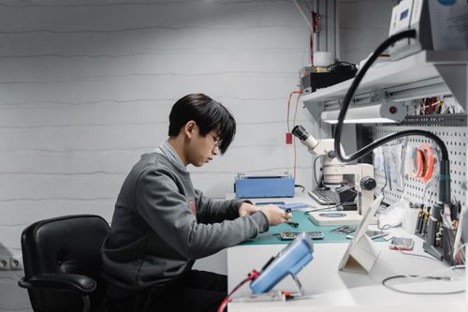
BS EN 61340-5-1 sets out the requirements for protecting electronic devices from electrostatic phenomena during manufacturing. It applies to the workplace as a whole, but the workbench is where most hands-on assembly actually happens, which makes it central to compliance.
For a workbench to meet this standard, several things need to be verified:
- The worktop surface must safely dissipate static charge at a controlled rate, directing it to an earthed ground point rather than letting it build up or discharge suddenly through a component.
- Any tools, mats, wrist straps, and seating used at the bench must also be tested and compatible with the overall ESD protection system.
The standard is not just about buying ESD-labelled products and calling it a day. It requires the whole workstation to function as an integrated protection system, verified through testing.
What “Verified Testing” Actually Looks Like
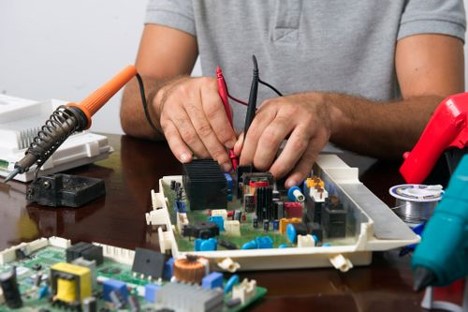
This is where many suppliers fall short. Slapping an ESD logo on a workbench does not mean the bench has been properly tested. The standard demands measurable, repeatable performance. Surface resistance needs to fall within specific ranges. Grounding connections need to be reliable and permanent.
A genuinely compliant electronics workbench will have documentation to back it up. That means test results, not just marketing claims. Independent verification matters here, and it should be ongoing rather than a one-time exercise at the point of manufacture.
When evaluating a supplier, ask directly: has this bench been tested to EN 61340-5-1 and can you provide the results? If the answer is vague, that tells you something.
The Real-World Difference It Makes
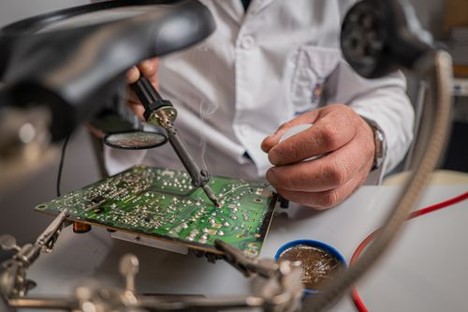
Companies handling components for aerospace, defence, medical devices, and computing have no margin for ambiguity here. A field failure caused by ESD damage in a pacemaker or avionics system carries consequences far beyond a warranty claim.
Even in lower-stakes production environments, the cost argument alone justifies proper ESD protection. Component prices have climbed steadily in recent years, and supply chain delays mean that replacing damaged stock is not always as simple as placing a new order. A properly certified electronic workbench setup pays for itself through reduced waste, fewer reworks, and fewer mysterious failures that eat into engineering time.
Why the Standard Gets Updated
Standards are not static documents. BS EN 61340-5-1 has been revised over time to reflect changes in component technology. As chips have become smaller and more sensitive, the thresholds for acceptable static levels have tightened. What passed compliance testing a decade ago may not pass today’s requirements.
This matters for anyone running an existing ESD-controlled workspace. Legacy equipment should be checked against current requirements periodically, not assumed to remain compliant indefinitely.
Conclusion
Static electricity is invisible, but its consequences are not. BS EN 61340-5-1 exists because the electronics industry needed a rigorous, consistent way to protect sensitive components from a risk that cannot be seen or felt in real time. Compliance is not a bureaucratic box to tick. It is a practical safeguard that protects production quality, reduces costs, and supports reliable outcomes across the life of a product.
At Workshop Workbench, every ESD bench is tested against EN 61340-5-1 before dispatch and undergoes ongoing independent verification, so you have the documentation to prove compliance, not just the promise of it.
FAQs
What does BS EN 61340-5-1 actually require for a compliant ESD workbench?
It requires the entire workstation to function as an integrated electrostatic protection system. The work surface, grounding path, tools, and accessories must all meet defined resistance ranges and be capable of safely dissipating static charge to earth without sudden discharge through a component.
How often should ESD workstation equipment be re-tested?
There is no single universal interval, but most guidance recommends periodic re-verification at least annually, and after any significant changes to the workspace, such as replacing surface mats, moving the bench, or changing the grounding connection.
Is there a visible way to tell if a workbench is genuinely ESD-compliant?
Not reliably by looking at it. Compliance must be confirmed through surface resistance testing using calibrated equipment. A label or colour alone is not sufficient evidence. Always request documented test results from the manufacturer or supplier.
Does ESD protection matter in small-scale electronics repair work, not just manufacturing?
Yes. Even in low-volume repair environments, handling unprotected components on a standard work surface creates real risk. Sensitive modern components can be damaged at static levels well below what a person can physically detect, which makes proper ESD precautions relevant regardless of production scale.