


Uncategorised
Lab Bench Buying Guide: What Researchers and Technicians Need from a Workbench
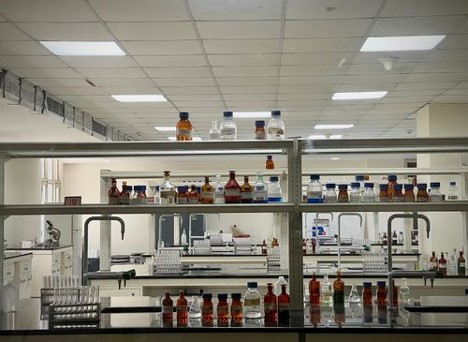
Jun
Most lab setups get the expensive equipment right. The microscopes, the centrifuges, the calibrated instruments. Then someone places everything onto a generic table bought from a furniture catalogue, and six months later the team is dealing with wobble, clutter, awkward posture, and surfaces that cannot be properly cleaned.
A lab bench is not a footnote in your lab design. It is the foundation everything else sits on, literally. Get it wrong, and it creates friction in every single task your team performs. This guide cuts through the noise and gives researchers, lab managers, and technicians a clear, practical breakdown of what actually matters before buying.
The Working Environment Changes Everything
Before looking at any specific features, be honest about the actual conditions the bench will operate in.
Will chemicals be used on or near the surface? Is the work detail-heavy and seated, or more physical and standing? How many people will share the bench? These are not abstract questions. The answers directly determine which specifications matter most and which ones you can safely ignore. Skipping this step is how labs end up with furniture that quietly makes everyone’s job harder.
Surface Material Is Not a Minor Detail
The worktop takes the most punishment, yet it is often the last thing considered carefully.
Laminate surfaces are practical for general lab work. They resist mild chemical contact, clean up easily, and are cost-effective. For heavier use involving solvents or sustained moisture, stainless steel is the more reliable choice. It withstands repeated cleaning with industrial disinfectants and resists corrosion. That matters significantly in life sciences and food testing environments. Hardwood worktops appear in specialist settings where precision instruments benefit from natural vibration damping.
No single material is universally correct. Match the surface to what will actually happen on it.
Height Adjustability Is Underrated

There is still a tendency in lab procurement to treat fixed-height benches as the default and adjustable ones as a premium add-on. That thinking is gradually changing.
An adjustable height workbench addresses something fixed benches never can: different people work differently. One technician may need to sit for extended microscopy sessions while another performs tasks requiring standing and applying downward pressure. A bench locked at a single height forces at least one of them into a compromised position.
Beyond ergonomics, there is a health argument here. Musculoskeletal problems are consistently reported as a major cause of absence across laboratory and technical roles. The Health and Safety Executive in the UK has long highlighted poor workstation setup as a contributing factor. Adjustability is not a luxury. In high-usage environments, it is a practical risk management decision.
Storage and Workflow Proximity

Under-bench storage tends to be treated as an afterthought. But the distance between a technician and their most-used tools has a real impact on how smoothly a session runs.
A well-configured industrial workbench integrates storage in a way that supports the actual workflow. Drawers at the right height for frequently used small tools. Cupboard space for bulkier items that need to stay within reach but off the surface. Upper shelving for reference materials or equipment used less frequently.
Before specifying storage, consider:
- How many tools or consumables need to be within arm’s reach during a typical session?
- What gets stored centrally versus what needs to be at each bench?
Getting this right at specification stage is far easier than retrofitting storage to a bench not designed with it in mind.
Structural Load Capacity and Stability
Laboratory equipment is heavy. An analytical balance, a microscope, a monitor setup with associated hardware can collectively add up faster than expected.
Every bench should have a clearly stated uniformly distributed load rating. For light analytical work, 300kg UDL may be adequate. For benches carrying multiple instruments simultaneously, 500kg or above is worth specifying. Stability matters just as much as raw capacity. A bench that flexes under load introduces vibration into sensitive measurements and creates a safety concern no calibration can fix. Check the frame construction carefully. Welded steel frames consistently outperform bolted alternatives in long-term stability.
Cleanability and Compliance
In regulated laboratory environments, the bench itself can fall under inspection. Surfaces with joints and recesses where contamination accumulates can become a compliance issue fast.
Ask suppliers whether the surface material is compatible with the cleaning agents used in your facility, and how edges and frame connections are finished to prevent debris accumulation. These questions separate suppliers who genuinely understand laboratory environments from those simply selling heavy furniture.
Conclusion
A rushed lab bench purchase creates problems that last for years. Surface material, load capacity, height flexibility, storage configuration, and cleanability are not minor specs. They define how productive and safe the workspace actually is every single day.
At Workshop Workbench, every bench is built with these demands in mind, with customisable options, documented load ratings, and surfaces suited to the real conditions of technical and research environments.
FAQs
What is the most important feature to look for in a lab bench?
Structural stability and surface material suitability have the most direct impact on daily use. A bench that flexes under load or has a surface incompatible with your cleaning agents creates ongoing problems that are very difficult to work around.
How do I calculate the right load capacity for my lab bench?
Add up the weight of every piece of equipment that will sit on the bench simultaneously, then apply a safety margin above that figure. For benches carrying multiple instruments, always specify a bench rated above your calculated total.
Are height-adjustable benches suitable for all laboratory environments?
Most laboratory settings benefit from adjustability, particularly where multiple users share the same bench or tasks alternate between seated and standing work. For the majority of research and technical settings, adjustability adds real practical value.
What surface material is best for a bench used in chemical testing?
Stainless steel is the most widely used surface where chemical contact is routine, due to its corrosion resistance and compatibility with industrial cleaning agents. For environments where chemical exposure is occasional or mild, a quality laminate surface may be sufficient.