


Uncategorised
How to Choose the Right Workbench for Your Workshop in the UK

Jan
The choice of workbench is one of the most important steps in the process of establishing an effective and efficient workshop. Workshops can be as small as a hobby zone and as big as an industry in the UK, so it is essential to select the bench that will be durable, safe and efficient in the working process. This blog provides the essential considerations that should be made when choosing a professional workbench, which will allow you to choose a workspace carefully.
Understanding Work Benches and Work Tables
It is worthwhile to decipher work bench UK and a normal work table before deciding on the choice of the workbench. Workbenches are made to be heavy-duty or specialised and are constructed with much stability and even have extra features such as integrated storage space or tool panels. On the other hand, work tables offer a plain surface for general duties and are usually not so specialised. When deciding on the right solution, the first thing to do is to identify the use of your workspace.
Key Considerations for Choosing a Workbench

Purpose and Workload
- Decide on whether the bench is to be a light DIY or a heavy industry.
- Individuals who are professionals or are passionate hobbyists need to be keen on benches that have elevated load capacity and those with reinforced frames.
- In the case of infrequent jobs, regular work tables UK can be used.
Material and Construction
- The typical materials are wood, steel and composite.
- Benches made out of steel are durable and stable in the long-run and can be used heavily over and over again.
- Laminated tops or hardwood give a compromise between strength and a finished surface to work on.
Size and Space Requirements
- Evaluate the workshop area in place.
- Standard-size benches might be restrictive, whereas modular or customisable benches can be customised to fit in your design.
- Take into consideration bench height as an ergonomic and convenient factor, particularly when it comes to the industrial environment.
Additional Features
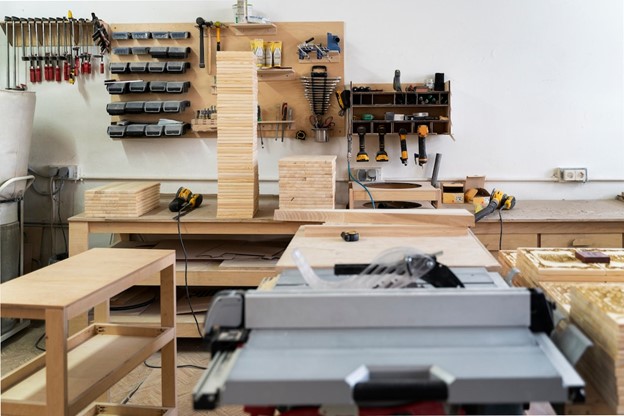
Inbuilt storage such as drawers, shelves or peg boards aids in maintaining order of the tools and making them available. Lighting, power and monitor arm are installed in a single frame, which improves the use of technical or assembly work. Modular accessories enable the possibility of upgrading the bench in the future without replacing the whole bench.
Compliance and Safety
- For electronics or precision work, consider ESD-safe benches to protect sensitive equipment.
- Ensure benches comply with local safety and industry standards, particularly for industrial workshops.
Selecting the Right Bench Type
- Medium-Duty Benches: Suitable for general-purpose use in workshops, garages, and educational settings.
- Heavy-Duty Benches: Designed for industrial workloads, supporting large machinery and tools.
- ESD Workbenches: Essential for electronics or precision assembly tasks.
- Mobile Workbenches: Ideal for flexible workspaces where equipment needs to be moved frequently.
- Height-Adjustable Benches: Provide ergonomic benefits, reducing strain during prolonged use.
Practical Tips for UK Workshops
- Defend your space prior to acquisition to be able to optimize your layout and workflow.
- Look at features that will make it more efficient like tool panels or under-bench storage.
- Consider future size and style increase or other equipment requirements.
- Choose benches with short lead times to minimise downtime in your workshop setup.
Conclusion
When selecting the appropriate workbench or work tables in the UK much consideration should be done in regards to purpose, material, size and features. Choosing a tailored bench for your workplace will enhance productivity, organisation and safety. Workshop Workbench offers a large variety of options with durable and customisable features to suit the needs of UK workshops in particular to those professionals who need long-term solutions. What do you consider to be the most important features of your workspace setup?
FAQs
1. What is the difference between a workbench and a work table?
A workbench is built for heavy-duty or specialised tasks with added features like storage or tool panels. A work table is a general-purpose surface suitable for lighter tasks.
2. How do I choose the right size workbench for my workshop?
Measure your available workspace, consider workflow, and leave enough clearance for movement and tools. Modular options allow customisation to fit your space.
3. Are ESD workbenches necessary in all workshops?
ESD benches are essential for electronics or precision assembly to prevent damage to sensitive equipment but are not required for general mechanical or woodworking tasks.
4. Can workbenches in the UK be customised?
Yes. Many suppliers, including Workshop Workbench, offer customisable options for size, material, accessories, and height to suit specific workshop requirements.