


Uncategorised
Electronics Workbench Setup: Best Layouts, ESD Surfaces, and Tool Placement

Nov
Ever noticed how your workbench is such a messy place and that the most basic circuit job becomes a nightmare. We’ve all been there. Your PCB repair layout or assembly table can either boost or bust your productivity, whether assembling a new prototype or just fixing a PCB. Today, we are going to discuss how we can best configure your engineer’s workbench of ESD-safe surfaces to the intelligent location of tools, without complicating any of it.
Planning the Layout: Zones for Flow
Every good setup starts with zoning. Imagine dividing your electronics workbench into clear sections.
When designing your engineers workbench, visualise how your hands move during a task. Tools that you grab frequently? Front and centre. Heavy gear like oscilloscopes? Keep them stable at eye level. This kind of layout makes your movements fluid, almost automatic.
ESD Surfaces: Protect What Matters

Let’s talk about static, the silent killer of components. You can’t see it, but one small discharge can fry an expensive microchip instantly. That’s why an ESD-safe engineers workbench isn’t optional; it’s essential.
An ESD workbench surface uses conductive laminates that safely ground static electricity. Pair that with an ESD wrist strap and grounded mat, and your entire workspace becomes a safe zone. Some engineers think anti-static sprays are enough they’re not. You want permanent ESD control integrated into your bench itself.
Tool Placement: A System That Thinks Like You
Tool chaos kills creativity. Ever noticed how your best ideas come when everything’s within reach? A professional engineer’s workbench helps you build muscle memory; you know exactly where each tool lives.
Here’s a simple way to organise:
Vertical Storage: Use pegboards or modular panels for pliers, cutters, and drivers.
Drawer Dividers: For resistors, ICs, and small modules, no more digging.
Overhead Lighting: White LED strips above the main electronics workbench surface give clear visibility for soldering or inspecting.
Cable Management: Clip your power leads, USB cords, and probes. Tangled wires belong nowhere near precision work.
Don’t forget to leave a clean zone and an empty patch for notes or sketches. It sounds small, but it makes a huge difference in staying focused.
Ergonomics: Comfort Meets Performance
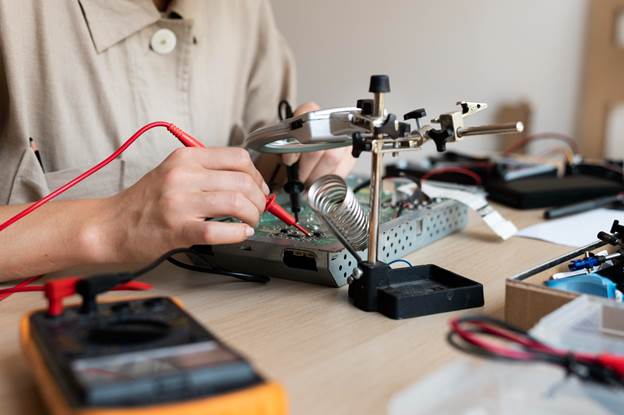
If you’ve spent hours hunched over a circuit board, you know the pain literally. An ergonomic engineer’s workbench reduces fatigue, especially during long assembly sessions. Adjustable height benches are a game-changer. Sit when soldering, stand when testing, switch without losing flow.
Add a padded chair with lumbar support and anti-glare lighting, and you’ve just extended your productive hours without strain. It’s not just comfort, it’s engineering done smarter.
Conclusion
An electronics workbench is not a fancy gear, but rather flowing and safe and focused. The workbench of the right engineer provides you with the advantage of creativity and control.
Workshop Workbench is ready to replace your workspace with hot stove ESD workstations with a modular Workbench layout with Benches that fit your workspace. A little change in the present can be your next big break in the future.
FAQs
1. What makes an ideal electronics workbench for engineers?
An ideal electronics workbench is stable, ESD-safe, and ergonomically designed. It should provide ample workspace, organised storage, and good lighting.
2. Why are ESD surfaces important on an engineers workbench?
ESD surfaces prevent electrostatic discharges that can damage sensitive electronic components, ensuring safety and product longevity.
3. How should tools be arranged on a workbench?
Arrange tools by frequency of use essentials in front, secondary tools on racks or drawers. Keep cables managed and workspace clutter-free.
4. Can I customise my electronics workbench layout?
Yes, Workshop Workbench offers custom-built solutions. You can choose bench size, materials, accessories, and ESD options to fit your exact workflow.